Jeremy Grantham Questions Bitcoin’s Longevity as Digital Gold Narrative Faces Scrutiny
TokenPost.ai
Legendary U.S. value investor Jeremy Grantham has argued that Bitcoin (BTC) will “gradually disappear,” reigniting a long-running debate over whether the world’s dominant cryptocurrency can mature into a durable store of value alongside gold. The question matters because markets are increasingly being shaped by a shift toward software, data, and tokenized assets—an evolution that could structurally raise demand for a ‘digital-native’ alternative to legacy safe havens.
At the core of the discussion is a deceptively simple prompt: why is gold valuable? While gold still has industrial and consumer uses—from electronics to dentistry to jewelry—its modern monetary relevance is widely seen as less about utility and more about ‘historically institutionalized consensus.’ Over thousands of years, gold became intertwined with wealth, sovereign power, and eventually central bank balance sheets. Its status as a reserve asset and crisis-era hedge is not the product of a single feature, but of time, repetition, and system-level adoption.
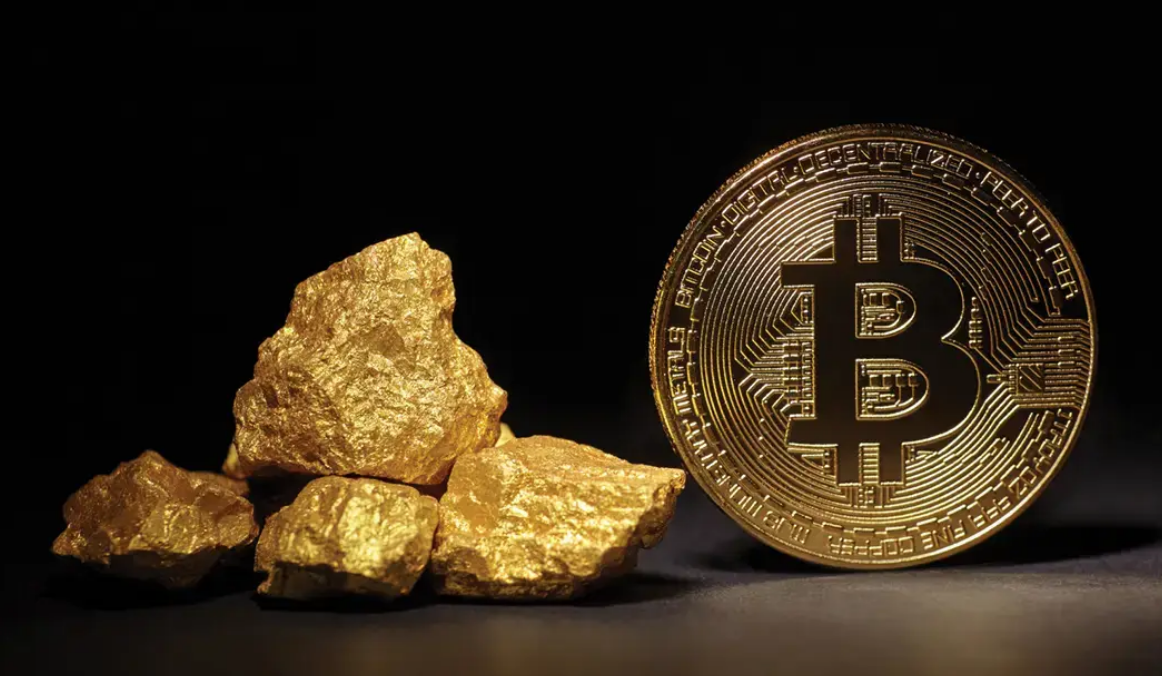
That historical framing has become a yardstick for Bitcoin, which emerged in a radically different environment. As financial activity migrates toward digital rails, proponents argue that a borderless store of value that depends less on banks and national settlement networks is not just convenient but increasingly necessary. This is where Bitcoin earned the moniker ‘digital gold’—and where skeptics, including Grantham, question whether the analogy is durable or merely a speculative narrative.
From a design standpoint, Bitcoin does share key traits with gold. Its supply cap is fixed at 21 million coins, and—unlike fiat currency—no central authority can expand issuance at will. As long as the protocol and network remain intact, scarcity is enforced at the code level. The blockchain also provides transparent verification of authenticity and transaction history, reducing counterfeiting risks in a way that differs from physical gold, which relies on assays, custody standards, and supply-chain validation.
Bitcoin’s advantages become clearer when measured through practical features of a store of value. It is highly portable and divisible: while moving and securing gold involves logistics, insurance, and physical risk, Bitcoin can be transferred globally in minutes with an internet connection. And while gold is difficult to divide into very small units for exchange, Bitcoin can be split down to eight decimal places, enabling fine-grained storage and settlement. In that narrow functional sense—scarcity plus transferability—supporters contend Bitcoin may perform ‘gold’s role’ more efficiently than gold itself.
The debate becomes more complicated, however, when a store of value is conflated with a ‘safe haven.’ Gold’s decades-long pattern is familiar: during geopolitical shocks or financial stress, capital often rotates into gold, reinforcing its defensive reputation. Bitcoin has not yet displayed such consistent crisis behavior. In multiple risk-off episodes, its price has fallen alongside equities and other risk assets, and its volatility has remained several times higher than gold’s—an obstacle for investors seeking stability rather than asymmetric upside.
Time is the other central differentiator. Gold’s role was not established by argument alone, but by millennia of repeated social and institutional reinforcement. Bitcoin’s track record is comparatively short—roughly 15 years—though it has accumulated notable milestones during that period, including nation-state adoption in limited contexts, the rise of regulated spot exchange-traded products in major markets, and growing integration into some institutional portfolios. Even so, by the standard of ‘history-made consensus,’ Bitcoin is still early in its proving phase.
Where does that leave the thesis that Bitcoin is a long-term store of value? A cautious assessment points to two conclusions. First, if the market accepts the premise that the digital economy requires a native store-of-value asset, Bitcoin remains one of the most credible candidates given its scarcity, censorship resistance, portability, and divisibility. Second, its accumulated ‘network effects’—brand recognition, liquidity depth, and mining security—make a swift displacement by a newer cryptocurrency less likely than many technology-driven disruption narratives would suggest.
Still, the leap from “credible candidate” to “inevitable winner” remains difficult to justify. The same logic used to explain gold’s dominance—long-duration trust and deep institutional embedding—has not yet had time to fully apply to Bitcoin. Declaring Bitcoin ‘irreplaceable’ also assumes a future in which regulation, market structure, and technological change do not materially shift incentives. In a sector defined by rapid iteration, that certainty is hard to claim.
Many analysts argue the next 10 to 20 years will be decisive. If Bitcoin repeatedly demonstrates that, in moments of systemic stress, market participants actually buy and hold it as protection—rather than sell it as a leveraged risk asset—then the language of ‘time-tested trust’ may begin to fit. Such a behavioral turn would not require thousands of years in a modern, fast-moving economy, but it would require a sufficient number of real-world stress tests across cycles.
For now, Grantham’s skepticism underscores the unresolved nature of the experiment. Gold remains the benchmark store of value because it is not merely scarce—it is socially entrenched. Bitcoin, by contrast, is attempting to build a comparable consensus in real time, under the scrutiny of global regulators and institutional capital. Whether it ultimately settles into the role of enduring ‘digital gold’ will depend less on rhetoric than on the slow accumulation of history—one crisis, one adoption milestone, and one market cycle at a time.
Article Summary by TokenPost.ai